
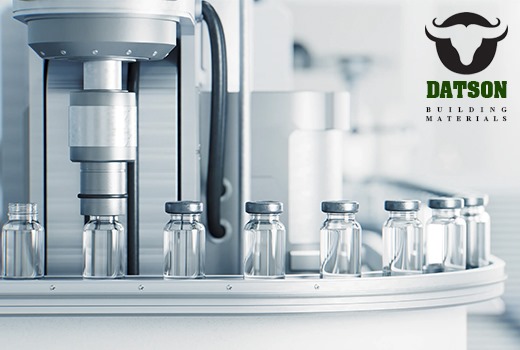
Role of Lubricants in Tablet Manufacturing
In the complex world of pharmaceutical production, tablet manufacturing is one of the most critical and sensitive stages. Lubricants play an indispensable role in ensuring that tablets are manufactured efficiently, consistently, and without compromising quality. Their primary function is to reduce friction during the tablet compression process, helping prevent sticking and equipment wear.
Importance of Lubricants
During compression, granules or powders are pressed into tablets using high pressure. Without proper lubrication, the powder may stick to the punches and dies of the tablet press, causing defects and even machine failure. Lubricants not only facilitate the smooth ejection of tablets from dies but also help maintain consistent tablet weight and structure.
Types of Pharmaceutical Lubricants
Pharmaceutical lubricants are broadly categorized as either hydrophilic (water-attracting) or hydrophobic (water-repelling). While hydrophilic lubricants like polyethylene glycol are suitable in certain formulations, hydrophobic agents such as magnesium stearate, stearic acid, and talc as a lubricant are more commonly used due to their excellent anti-sticking and glidant properties.
Talc as a Lubricant
Talc is a naturally occurring mineral composed primarily of magnesium, silicon, and oxygen. Its lamellar structure, softness, and chemical stability make it a unique excipient in pharmaceuticals.
Chemical and Physical Properties of Talc
Talc is hydrophobic, chemically inert, and has a platy structure that enables it to form a film between tablet surfaces and metal equipment parts. These properties contribute to its effectiveness in reducing friction and wear during tablet production. Talcum powder particles also have excellent flow characteristics, which help improve the uniformity of powder blends.
Mechanism of Lubrication by Talc
Talc functions as a boundary lubricant. It coats the surfaces of tooling and powder particles, thereby reducing direct contact between the tablet formulation and the machinery. As a result, it minimizes die wall friction and facilitates the clean ejection of tablets. This effect helps reduce stress on the tablet press and improves the quality and appearance of the final product.
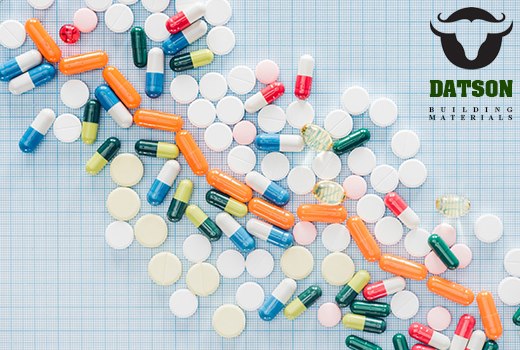
Benefits of Using Talc in Tablet Manufacturing
The use of talc pharmaceutical use in tablets is based on several functional advantages. One major benefit is its ability to serve as both a lubricant and a glidant. This dual function helps reduce friction while also improving powder flow in hoppers and feeders.
Talc’s natural softness ensures that it does not damage tablet punches or dies, even in high-speed presses. Its ability to provide consistent tablet release reduces the chances of defects like capping, lamination, or sticking, which can often occur in the absence of proper lubrication.
Additionally, talc is chemically stable and does not react with other ingredients in the formulation. This makes it suitable for use in a wide variety of tablet types, including those with sensitive active pharmaceutical ingredients (APIs).
Process Efficiency with Talc Lubrication
The use of talc in tablet manufacturing enhances overall production efficiency. Since talc reduces friction, it enables faster tablet ejection, which in turn allows for higher production speeds without sacrificing tablet quality.
With talc, equipment downtime caused by cleaning and maintenance can be significantly reduced. Its role in minimizing sticking also reduces the likelihood of batch rejection due to surface imperfections or inconsistencies in weight. As a result, manufacturers can maintain tighter quality control while also increasing throughput.
Comparison of Talc with Other Lubricants
Talc is often compared with other widely used pharmaceutical lubricants, especially magnesium stearate. While both are effective, they serve slightly different functions.
Magnesium stearate, for example, is more efficient in reducing ejection force, but it may interfere with tablet dissolution or bioavailability when used excessively. Talc, on the other hand, is less likely to impact dissolution rates and offers better flow properties.
In certain formulations, combining talc with a small quantity of magnesium stearate or other lubricants can yield optimal results. However, excessive reliance on any one lubricant should be avoided to maintain formulation balance.
Limitations and Challenges of Using Talc as Lubricant
While talc is highly useful, it does come with some limitations. One concern is the potential for over-lubrication, which can affect tablet hardness and dissolution profiles. Uniform dispersion is essential to avoid localized high concentrations that may impair tablet integrity.
Another issue is talc’s hydrophobic nature, which may pose challenges in formulations where fast disintegration or rapid dissolution is desired. In such cases, its use must be carefully optimized to ensure it doesn’t hinder drug release.
In rare instances, impurities in talc, such as asbestos, can raise safety concerns. That’s why pharmaceutical-grade talc undergoes rigorous purification and quality testing to ensure compliance with global pharmacopeial standards.
Best Practices for Using Talc in Tablet Formulation
To harness talc’s benefits while minimizing its drawbacks, manufacturers follow several best practices. First, selecting high-purity, pharmaceutical-grade talc ensures that the material meets safety and performance requirements.
The method and timing of talc incorporation into the blend are also crucial. Typically, talc is added at the final blending stage to avoid over-mixing, which can diminish the effectiveness of other excipients or impair tablet uniformity.
Particle size distribution should also be monitored, as finer particles offer better coverage but may increase the risk of airborne dust during processing. Closed systems or dust extraction units can help manage this issue efficiently.
Monitoring compression force, ejection speed, and press cleanliness further ensures that talc performs optimally within the system. Adjusting the formulation based on tablet design, weight, and API sensitivity also plays a critical role in successful talc integration.
Conclusion
Talc remains one of the most trusted and versatile excipients in the pharmaceutical industry, particularly in tablet manufacturing. Its ability to act as a dry boundary lubricant, improve powder flow, and reduce die wall friction makes it essential for achieving high-quality tablets consistently.
Despite concerns or misconceptions such as “is talc a lubricant” or “is talcum powder a dry lubricant” extensive industrial experience and scientific research confirm its effectiveness in controlled applications. The answer to both is yes: talc lubricant and talcum powder lubricant serve as functional and reliable dry lubricants in tablet processing.
DATSON Building Materials is a trusted brand in supply of high-quality building and construction materials serving clients across the UAE and international markets. With a strong commitment to reliability, product excellence and customer satisfaction, DATSON continues to support a wide range of sectors including construction, oil & gas, agriculture and pharmaceutical industries.