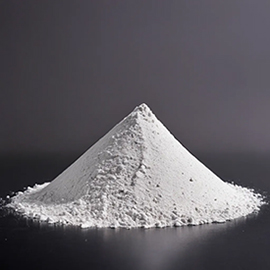
Calcium carbonate plays a crucial role in global manufacturing, with applications that span a wide variety of sectors. In paper production, it serves both as a filler and coating agent, improving whiteness and opacity while lowering raw material costs. In plastic manufacturing, ground calcium carbonate powder is used to boost strength and thermal stability, making it an essential ingredient in many types of plastic goods. The construction industry also depends heavily on calcium carbonate, particularly as a vital component in cement and concrete production. It improves the workability, strength, and durability of concrete, which contributes significantly to the development of buildings, bridges, roads, foundations, and other infrastructure.
The addition of calcium carbonate enhances the consistency and texture of concrete, ensuring a smooth mix that is easy to apply. This results in a high-quality finish and increases the longevity of structures by improving their resistance to wear, weathering, and environmental stresses. Its affordability and widespread availability make it a preferred choice in large-scale construction projects, offering both cost-effectiveness and enhanced performance.
In healthcare, calcium carbonate powder is widely used as both a dietary calcium supplement and a common antacid, further demonstrating its versatility across industries.
Calcium carbonate is a key industrial material used across sectors such as paper, plastics, construction, and healthcare. In paper production, it enhances whiteness and opacity while reducing material costs. In the plastics industry, bulk calcium carbonate powder improves stiffness, hardness, and impact resistance, making it essential in products like car parts, packaging, and electronics. It also reduces reliance on expensive resins and enhances surface finish and durability.
In construction, calcium carbonate strengthens concrete and cement, improving workability, texture, and resistance to wear and weathering. Its affordability makes it ideal for large-scale projects such as buildings, bridges, and roads. A reliable supply from ground calcium carbonate suppliers ensures consistency in quality and performance.
Ground calcium carbonate manufacturers use advanced processes to create application-specific products, while calcium carbonate exporters and calcium carbonate distributors support global demand by delivering materials efficiently. Their coordinated efforts keep industries supplied with high-quality, dependable inputs.
In healthcare, calcium carbonate is widely used as a calcium supplement and antacid, further emphasizing its diverse industrial importance.
A pivotal material for the paint and coating industries that helps in the enhancement of paints and coatings’ features and is cost and performance effective is calcium carbonate in a powder form. Because of the calcium carbonate present in the powder, additives such as thickeners and opacifiers clog the resin systems. For this reason, cost-effective paint is obtained which is of best quality.
Another vital point on the application of calcium carbonate is in the texture, uniformity, and smoothness of coat. It creates an even managed professional finish. This one is because when presented on the outdoor surfaces, especially walls, it does not allow for dirt infiltration, endures for unwanted solar rays, and also survives constant use. Hence the paint remains reliable or durable for a longer time. In some cases calcium carbonate is included within both water and oil based paints. This will significantly enhances their performance flexibility and overall performance thereby making them suitable for many applications.
Calcium carbonate powder finds an important use in the manufacture of paper, particularly as a coating pigment and a filler. Calcium carbonate filler raises the opacity and brightness of the paper, which makes it suitable for high-quality printing applications. Calcium carbonate is used in the paper-making process to help provide a finer finish on the paper, which would improve the smoothness, printability, and overall quality of the final product, resulting in sharper images and more vibrant colors in printed materials.
To cloture, when used as a coating pigment, calcium carbonate increases stiffness, smoothness and calipers of the coated paper improving its structural quality. With the use of calcium carbonate, it will be possible for the manufacturers to produce the paper products which benefit from ‘excellent’ printability and smooth, well-balanced, and pretty finishes which is crucial for any great printed outputs.
Within the purview of agriculture calcium carbonate powder is basically applied as a soil amendment to maintain the pH of the soil in an appropriate level. It is especially effective in counteracting acidic soils, resulting in pH levels that are more favorable for plant growth. In this way, calcium carbonate pH regulates the concentration of key nutrients available to plants, such as nitrogen, phosphorus and potassium which contributes to enhanced growth and increases in production levels.
In addition, calcium carbonate also increases the porosity of the soil structure reducing its compaction, by increasing its moisture holding capacity and enhancing air circulation thus providing an enabling environment for the development of better root systems. It’s also added to feedstuff of livestock to boost Calcium levels as natural source which bridges the calcium nutrition gap in growing stock, through development of bones and teeth.
Calcium carbonate powder is a chemical that is extensively utilized in the unequivocal formulation of tablets and dietary tablets in the pharmaceutical industry. It also serves the purpose of a stabilizer, aiding in maintaining the cohesion of the components and providing the tablets with a desired figure and density. Most of the calcium containing products in the market with regard to dietary foods or dietary supplements contain calcium carbonate in them as it is the most readily available source of calcium that is very important in the maintenance of healthy bones. For these reasons, it is used in medicine for various purposes because of its inertness towards active substances and so does not diminish their bioavailability.
Moreover, calcium carbonate is frequently used in the composition of antacids, because of its alkaline properties and its ability to relieve excess stomach acids thus treating heartburn, acid reflux as well as other similar diseases.